Paying More to Load Less: Meet the People Deliberately Throttling Their Way to Inner Peace

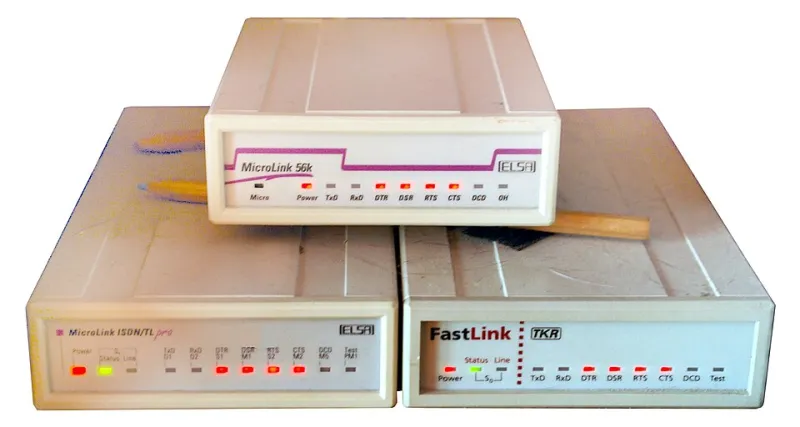
Photo: albinfo, CC0, via Wikimedia Commons
Somewhere in a Brooklyn apartment that costs $2,800 a month, a 34-year-old UX designer named Garrett is watching a YouTube video load. He has been watching it load for eleven minutes. He is, by his own account, thriving.
"The buffering is the content," Garrett tells us over a phone call that keeps cutting out — not because of bad reception, but because he has voluntarily enrolled in something called a "bandwidth diet." He pays his ISP an extra $15 a month for the privilege of having his connection artificially capped at speeds roughly equivalent to a 2003 flip phone on a Tuesday afternoon in rural Kansas. "I used to consume everything instantly," he says. "Now I sit with things."
This is the Bandwidth Ascetics movement, and before you close this tab — which, if you're reading this on StaticNoise, may take a moment anyway — it is more widespread than you'd expect.
The Buffering Faithful
It started, as most genuinely weird internet subcultures do, on Reddit. Specifically, a subreddit called r/IntentionalLag, which currently boasts 47,000 members who refer to themselves as "throttlers," "slow-laners," or, in the more spiritually inclined corners of the community, "bandwidth monks." The premise is simple: in a world where a 4K Netflix stream can materialize in under two seconds, deliberately living at dial-up-adjacent speeds forces you to be intentional about what you actually want to see.
The psychological logic, if you squint, tracks. Researchers studying decision fatigue have long noted that the easier something is to access, the more we consume it mindlessly. When loading a single webpage takes forty-five seconds, you stop doom-scrolling by sheer mechanical necessity. You can't impulse-watch a three-hour true crime documentary if the first thirty seconds take longer to buffer than your attention span. The friction, practitioners argue, is the feature.
Dr. Anita Rosen, a behavioral psychologist at a mid-sized university in Ohio who has studied compulsive technology use — and who asked us not to name the university because, quote, "I don't need this on my Wikipedia page" — says the instinct isn't entirely irrational. "Creating artificial barriers to consumption is a legitimate harm-reduction strategy," she explains. "People do it with alcohol, with food, with social media apps. Throttling your internet is just a more dramatic version of putting your phone in another room."
The dramatic part, of course, is the part StaticNoise is here for.
The Pricing Paradox
Here is the thing that makes this movement genuinely funny: it costs money. Real, American dollars. ISPs don't offer "please make my internet terrible" as a standard package tier, so throttlers have to get creative. Some pay for add-on services that cap their speeds. Others use router firmware to impose their own limits. A small but devoted cohort actually pays for legacy DSL plans that ISPs still technically offer in certain markets — ancient infrastructure that delivers the authentic slow-internet experience without the need for artificial restriction.
Garrett, our Brooklyn ascetic, estimates he spends about $200 a year maintaining his throttled setup, including a router he flashed with custom firmware and a subscription to a VPN service configured specifically to slow his connection down. He also owns a $400 mechanical keyboard, a $180 analog alarm clock, and a French press that cost more than some laptops. The bandwidth diet fits neatly into an aesthetic of deliberate, expensive simplicity that has characterized a certain strain of millennial consumer culture for the better part of a decade.
This is, naturally, the part where the cynics show up.
Performance Art or Genuine Detox?
"It's just slow-living rebadged for tech bros," says Priya, a software engineer in Austin who encountered the community through a coworker and declined to give her last name because she "would like to keep my job." "These are people who could turn off their phones. They could use website blockers. They could touch grass. Instead they're paying extra to cosplay as having bad internet while posting about it on the subreddit with their bad internet."
This is a fair point, and the r/IntentionalLag community would be the first to acknowledge the irony — they spend considerable bandwidth discussing their bandwidth restrictions. The top post of the month, at time of writing, is a 400-comment thread titled "Best ways to explain throttling to your girlfriend without her leaving you." The second most popular is a detailed tutorial on how to throttle your connection specifically except for video calls, so you can maintain the lifestyle without getting fired.
The exceptions are telling. Most bandwidth monks carve out speed allowances for work, for video calls, for anything that involves other people's time. What they're actually restricting, when you look closely, is personal consumption: social media, streaming, news aggregators, the ambient scroll. Which raises the question of whether the throttled connection is doing the work, or whether just deciding to throttle it — committing to the bit, financially and technically — is what actually changes behavior.
"It's a commitment device," Dr. Rosen says. "The money and the effort make it feel real. A lot of people have tried screen time limits and ignored them. You can't really ignore it when your Instagram feed takes four minutes to load."
Signal Degraded, Clarity Improved
Back in Brooklyn, Garrett's video has finally loaded. He watches it — a twelve-minute essay about the history of the card catalog — and reports that he found it "genuinely enriching" in a way he doubts he would have if it had auto-played after a YouTube algorithm rabbit hole at midnight.
Maybe that's real. Maybe the friction did the thing it was supposed to do. Or maybe Garrett would have found the video enriching regardless, and the elaborate throttling infrastructure is just the story he tells himself to justify $2,800 rent and a $400 keyboard in the same mental ledger as "living intentionally."
StaticNoise, broadcasting from somewhere in the digital noise, is not here to judge. We are, after all, a website whose own domain looks like someone fell asleep on a keyboard. We understand the appeal of the unclear signal. Sometimes the static is the point.
What we can say is this: in a media environment engineered from the ground up to deliver content faster, smoother, and more frictionlessly than ever before, the people paying extra to make it worse are at least asking an interesting question. Whether the answer is "profound digital minimalism" or "the most elaborate excuse to not reply to emails" probably depends on who's asking.
For Garrett, the video ends. His connection speed returns to its artificially imposed crawl. Somewhere across town, a 4K stream loads in 1.8 seconds and nobody notices.
He seems fine with that.