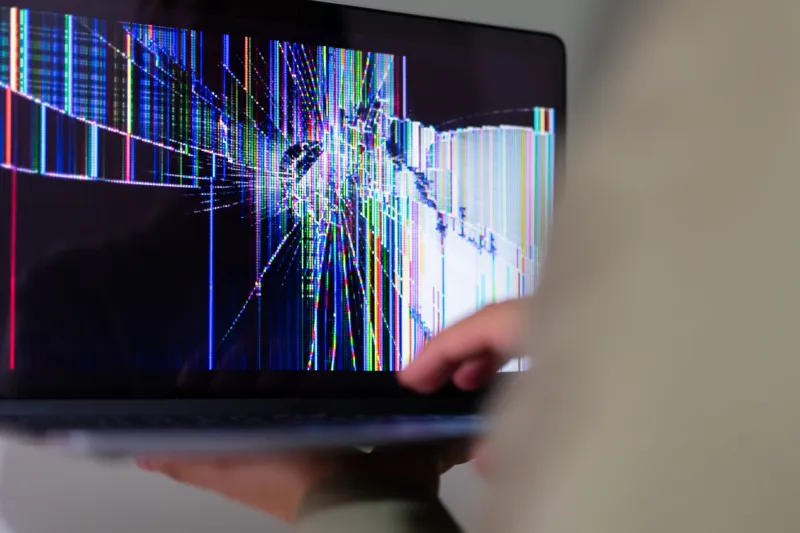
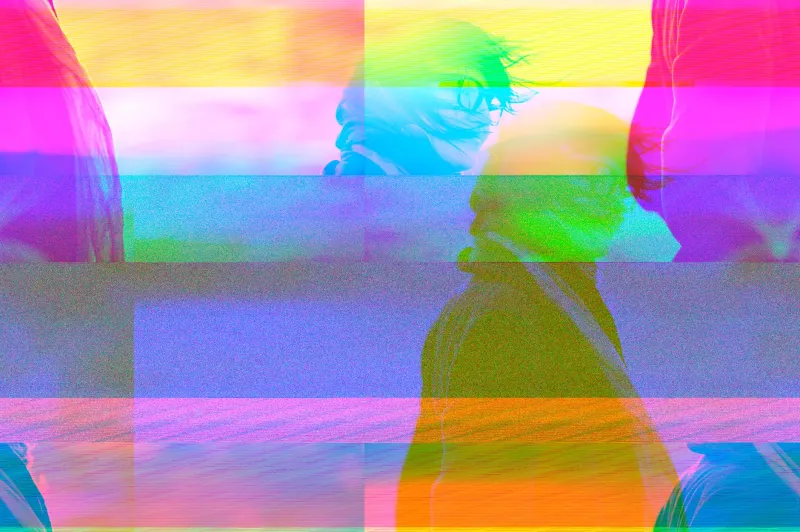
Rotting on Purpose: The Artists Turning Digital Decay Into a Movement
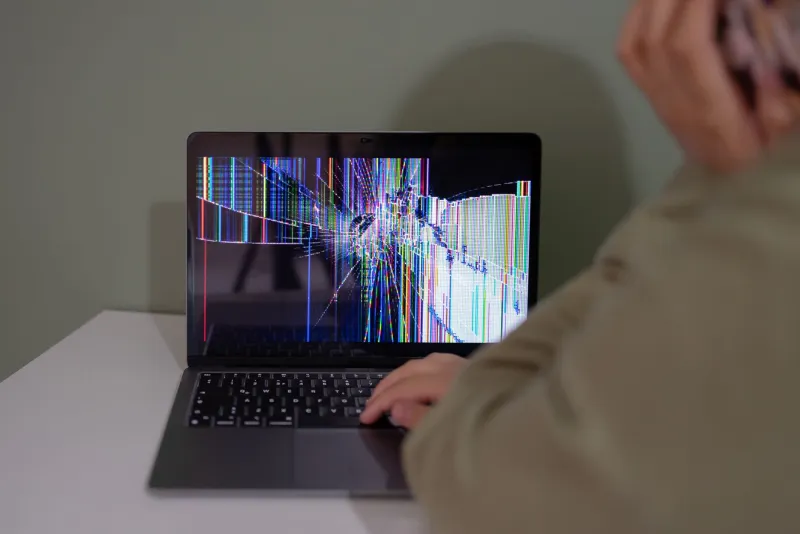
Somewhere between a GeoCities memorial and a fever dream, there's a website you weren't supposed to find. The images are half-loaded. The cursor turns into a spinning hourglass. A MIDI file from 1997 starts playing, unprompted, like a ghost tapping you on the shoulder. You can't tell if this thing was abandoned in 2003 or launched last Tuesday.
Spoiler: it launched last Tuesday. And its creator spent three weeks getting the decay just right.
This is the new frontier of digital art — and it's thriving in places that look, on the surface, like they've already died.
The Signal Is the Noise
Here at StaticNoise, we know a thing or two about unclear signals and obfuscated purposes. Our own corner of the internet exists somewhere between placeholder and prophecy. So when we started noticing a surge of artists deliberately crafting websites that feel corrupted, expired, or frozen mid-scream in 1999, we had to investigate.
The movement doesn't have an official name — which is kind of the point. Call it "digital decay aesthetics," call it "glitchcore web design," call it what your mom calls everything you do online: "I don't understand this, honey." Whatever the label, the intent is consistent: these creators are weaponizing the visual language of abandonment to say something sharp about the internet we live in now.
Think of it as the punk rock of web design. Except instead of a leather jacket, you're wearing a broken iframe.
Why Dead Looks So Alive Right Now
To understand the appeal, you have to understand what these artists are reacting against. The modern internet — the one curated by algorithms, optimized for engagement, and A/B tested into a beige oblivion — is relentlessly, aggressively polished. Every corner is rounded. Every color palette is "warm neutrals." Every website loads in under two seconds and immediately asks you to accept cookies, subscribe to a newsletter, and rate your experience before you've even read a single word.
It's exhausting. It's sterile. And for a generation that grew up watching the internet transform from a weird, anarchic playground into a corporate content delivery machine, it feels like a profound loss.
Enter: the rot.
Digital artists like Brooklyn-based creator Marisol Vega (who asked us to describe her work as "vibes archaeology") are building websites that feel like excavation sites. Her latest project, a fake memorial page for a fictional 1990s software company, features blinking text, a guestbook full of entries from "users" dated between 2001 and 2004, and an "Under Construction" GIF that she hand-drew frame by frame. The whole thing took six months. It has no monetization strategy. It has no SEO optimization. It exists, she says, "to make people feel like they found something that wasn't meant for them."
That feeling — of stumbling onto something secret, unoptimized, human — is exactly what the modern web has engineered out of existence.
Corruption as Commentary
There's a political edge to this work that's easy to miss if you're too busy marveling at the deliberately broken CSS. Many of these artists are making pointed critiques about surveillance capitalism, platform dependency, and the homogenization of online culture.
One collective operating out of Chicago — they go by the name "Bad Sector" and communicate exclusively through a website that appears to 404 on first load (you have to wait 45 seconds for it to "resolve") — describes their practice as "anti-design design." Their manifesto, buried three clicks deep behind a fake error message, argues that the aesthetics of abandonment are "the only honest response to an internet that has been optimized to extract rather than express."
Heavy stuff. Also, the manifesto auto-scrolls at an unreadable speed unless you disable JavaScript. They did that on purpose.
The corrupted image, in this context, isn't a failure — it's a feature. A JPEG that loads halfway and stops is a reminder that digital objects are fragile, that platforms die, that the permanence we assume about the internet is an illusion maintained by server costs and corporate goodwill. When those run out, everything rots.
These artists are just speeding up the timeline. For aesthetic purposes.
The Gen Z Nostalgia Paradox
Here's the twist that makes cultural critics genuinely dizzy: most of the creators driving this movement are too young to remember the era they're recreating. A 22-year-old artist building a fake Angelfire page from "1998" has never actually used Angelfire. They're working from screenshots, from Internet Archive rabbit holes, from the collective cultural memory of an internet they experienced only as ruins.
This is nostalgia without the original experience — a longing for a vibe rather than a memory. And it might actually make the art more interesting, not less. Freed from the actual frustrations of dial-up modems and browser incompatibility, these creators can extract the aesthetic essence of early web culture and deploy it with surgical precision.
The result is something that feels emotionally authentic even when it's historically approximate. It's not documentation. It's mythology.
San Francisco-based digital artist and self-described "web archaeologist" Devon Chiu puts it this way: "I'm not trying to recreate the past. I'm trying to figure out what we lost and whether we can steal some of it back. The old internet felt like it had texture. Now everything is smooth and I hate it."
Finding Beauty in the Buffer
What's genuinely remarkable is how these projects are being received. Works that look, at first glance, like broken websites are getting serious critical attention — featured in digital art publications, discussed in design school curricula, and increasingly shown in physical gallery contexts where they're projected onto walls and experienced as installation art.
The irony of displaying "anti-internet" internet art in a gallery is not lost on anyone involved. That irony is, largely, the point.
There's also a thriving community dimension to this work. Forums, Discord servers, and — yes — deliberately ugly community websites have sprung up where practitioners share techniques for achieving authentic-looking digital decay. How do you make a GIF look like it's been compressed seventeen times? How do you write HTML that renders slightly differently in every browser? How do you build a guestbook that feels genuinely lived-in?
These are the craft questions of a new medium. And people are taking them seriously.
Signal Unclear — Proceed Anyway
The internet was always supposed to be a little chaotic. A little weird. A little hard to parse. Somewhere along the way, we let it get tamed — flattened into feeds and funnels and frictionless checkout experiences.
The artists building beautiful, broken, deliberately dead websites are pushing back against that taming. They're insisting that confusion has value. That friction can be meaningful. That something doesn't have to load correctly to communicate something true.
Here at StaticNoise, broadcasting from our own pleasantly obfuscated corner of the web, we find that argument pretty compelling.
The signal is unclear. The static is the message. And someone, somewhere, is spending six months getting the JPEG corruption exactly right.
Good for them.