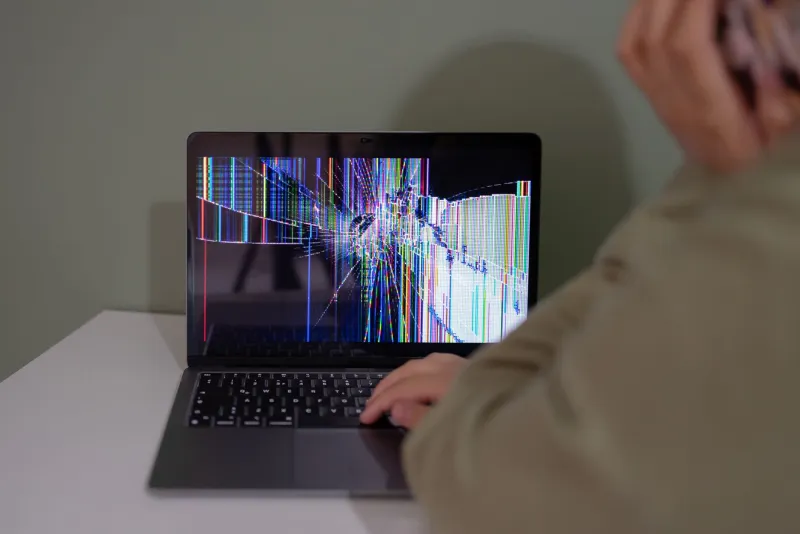
Dead Links, Living Legends: How the Internet's Ghost Towns Became Sacred Ground
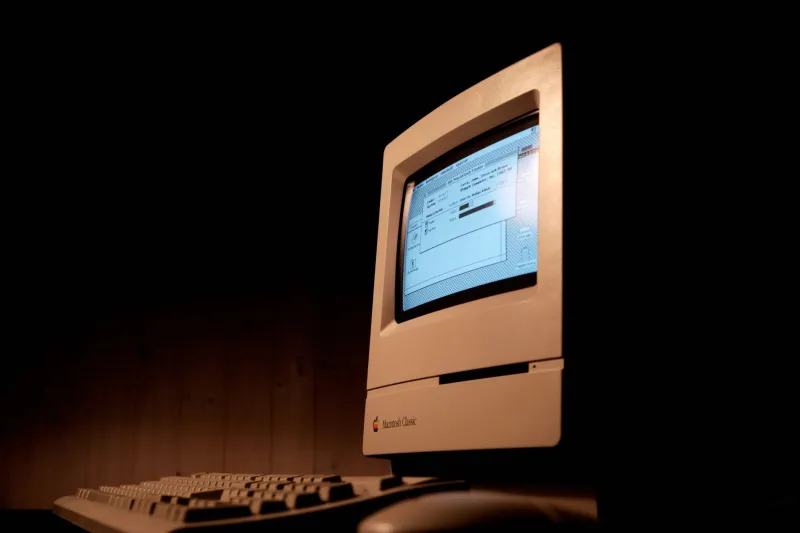
You've been there. You click a link that someone buried in a Reddit thread from 2009, and suddenly you're staring at a website that looks like it was designed on a dare. Neon text on a black background. A MIDI file of Evanescence playing automatically. A hit counter that stopped at 4,847 sometime during the Obama administration. You should close the tab. You don't close the tab.
That specific feeling — part nostalgia, part anthropological fascination, part secondhand embarrassment — is apparently universal enough that entire communities have formed around chasing it. And here at StaticNoise, broadcasting from whatever frequency this domain occupies, we feel that in our bones.
The New Digital Archaeologists
Meet the people who spend their weekends doing what most of us do by accident: deliberately hunting down the internet's abandoned storefronts, dead fan pages, and half-finished personal homepages. They call themselves digital preservationists, web archaeologists, or, if they're feeling dramatic, archivists of the void.
Organizations like the Internet Archive's Wayback Machine have been doing the heavy institutional lifting for years — snapshots of over 860 billion web pages, catalogued with the quiet dedication of librarians who never sleep and apparently have unlimited hard drive space. But alongside that institutional effort, a grassroots movement has emerged. Subreddits like r/lostmedia and r/InternetMysteries have ballooned in membership, Discord servers dedicated to tracking down specific dead websites now number in the hundreds, and Twitter accounts with names like @abandonedweb and @deadinternet post daily screenshots of websites that haven't been updated since Friendster was a personality trait.
These aren't just nostalgia trips, though nostalgia is definitely doing a lot of the heavy lifting here. These communities treat defunct digital spaces with the same curatorial seriousness that a museum curator brings to a 19th-century oil painting. The question isn't just what was this? It's what does this tell us about who we were?
A GeoCities Isn't Just a GeoCities
When Yahoo shut down GeoCities in 2009, roughly 38 million user-built pages vanished overnight. It was, by any reasonable measure, one of the largest single acts of digital destruction in history. The internet shrugged. Most people had already moved on to Facebook, which had the distinct advantage of not looking like a fever dream designed in Microsoft Paint.
But a dedicated group of volunteers called the Archive Team spent weeks frantically scraping whatever they could before the servers went dark, ultimately preserving around 900 gigabytes of GeoCities content. That archive now lives on at the Internet Archive, and people visit it constantly — not because the websites are good, but precisely because they're not. They're raw. They're personal. They're somebody's actual self, expressed through blinking text and poorly-tiled background images of dragons.
"There's something about the early web that feels more human than anything we post now," one longtime Wayback Machine contributor wrote in a forum post that itself has the energy of a digital artifact. "These pages weren't optimized for engagement. They were just... someone's brain, dumped onto a server."
That rawness is exactly what makes abandoned websites feel like landmarks rather than litter. They're uncurated in a way that modern social media — algorithmically smoothed and engagement-optimized — simply isn't.
The Nostalgia Industrial Complex Has Nothing to Do With This
Here's where it gets interesting, and where the StaticNoise editorial team would like to gently push back on the easy explanation. This isn't just millennials getting weepy about the early internet. A significant portion of the people most obsessed with preserving and exploring abandoned web spaces are Gen Z — people who were in elementary school when most of these sites went dark, or weren't born yet when GeoCities was in its prime.
For them, the appeal isn't nostalgia. It's closer to the feeling of wandering through an abandoned building: the thrill of trespassing on a space that time forgot, combined with genuine curiosity about the lives that once filled it. A dead fan page for a mid-tier boy band from 1998 isn't a memory for a 21-year-old — it's a discovery. It's archaeology.
This explains the rise of YouTube channels dedicated to "internet history," which pull in millions of views by walking audiences through defunct platforms, forgotten memes, and websites that no longer exist. The comments sections of these videos are a fascinating mix of older viewers saying oh god I remember this and younger ones saying this is the most unhinged thing I've ever seen and I can't look away.
What We Lose When We Stop Looking
There's a less whimsical dimension to all of this, and it deserves some airtime even on a site that exists at a domain that looks like someone mashed a keyboard and called it a day.
Digital preservation is genuinely difficult and chronically underfunded. Websites disappear not just because their owners abandon them, but because hosting costs money, domain registrations lapse, and the companies that once hosted them go under. Link rot — the process by which hyperlinks gradually stop working as the pages they point to vanish — affects an estimated 25% of links on the web within just a few years of being posted. Academic papers cite sources that no longer exist. News articles link to evidence that has evaporated. The web's memory is shorter than we'd like to admit.
The communities doing this preservation work are largely volunteers operating on enthusiasm and donated server space. The Internet Archive, the closest thing we have to an official memory of the web, runs on donations and has faced legal challenges from publishers who would rather certain things not be preserved at all.
So when someone spends their Saturday afternoon carefully documenting a defunct message board about competitive yo-yo tricks from 2003, they're doing something that sounds absurd but is, in a small and genuine way, an act of cultural maintenance.
The Static Is the Signal
There's a reason StaticNoise exists at a domain that looks like it was generated by a server having an existential crisis. The early internet was full of addresses like this — strings of characters that meant something to someone, somewhere, for reasons that aren't always clear. Half the web looked like a placeholder. Half of it was a placeholder, and someone built a community in it anyway.
The people preserving abandoned websites understand something that the clean, optimized, monetized modern web has largely forgotten: that meaning doesn't require polish. That a blinking "UNDER CONSTRUCTION" GIF on a page that never got finished is still a record of someone's ambition. That a dead social media account with 12 followers and posts about a TV show that got cancelled is still a portrait of a real person at a specific moment in time.
The internet's ghost towns aren't failures. They're documents. And the people wandering through them, screenshot by screenshot, archived page by archived page, are doing the closest thing the digital world has to oral history.
Somewhere out there, a server is humming quietly, keeping alive a website nobody visits anymore. Someone built it once. Someone might find it again.
That's worth something. Even if the MIDI file is still playing.