The Price of Nothing: How Dead Air Became America's Most Expensive Product
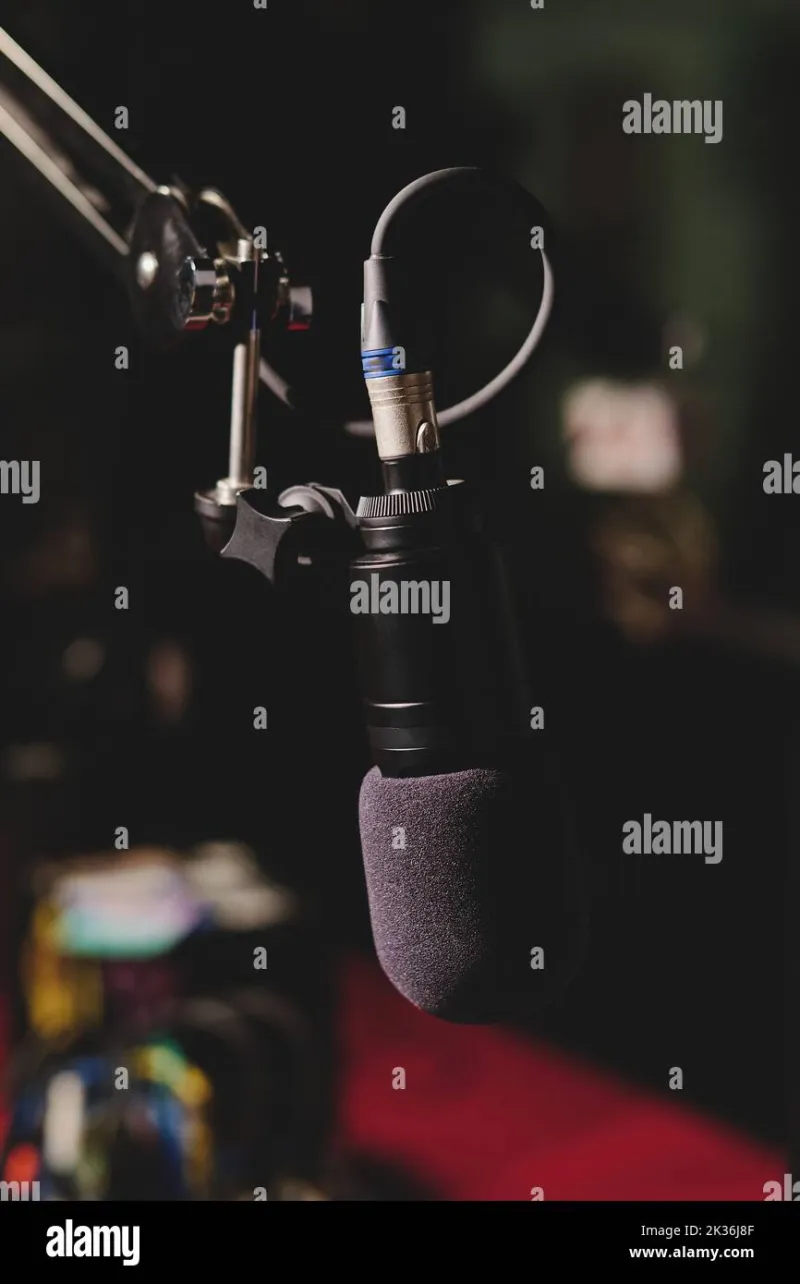
Photo: empty radio broadcasting studio microphone dark, via c8.alamy.com
There is a radio frequency in the Mountain West that broadcasts nothing. Not soft music, not a test tone, not a sleepy DJ mumbling into a dead microphone. Nothing. Just licensed, FCC-approved, legally broadcast silence, transmitted at considerable expense to a coverage area of roughly 40,000 people, none of whom have asked for it.
It is also, according to the company that owns it, doing quite well.
Welcome to the strangest corner of the modern broadcast economy, where the scarcest commodity isn't attention — it's the absence of attention, and it's being sold at prices that would make a Super Bowl ad buyer blink.
Spectrum Is Real Estate, and Somebody Owns the Void
Start with the least weird part, which is somehow still pretty weird: spectrum itself. Radio frequencies are finite public resources, auctioned off by the government and traded like beachfront property. And just like beachfront property, a lot of it sits vacant. Licensees hoard spectrum they don't use, waiting for values to rise, and there's a growing secondary market in leasing out those unused frequencies — sometimes to other broadcasters, sometimes to telecom companies, and increasingly, to people who want nothing broadcast on them at all.
"Owning a frequency and keeping it empty is the purest form of ownership there is," one spectrum broker told me, only half-joking. "Anyone can have something. Not everyone can have nothing, on purpose, in a desirable band."
Dead Air as a Business Model
Then there are the stations that broadcast silence deliberately. A handful of low-power stations around the country have experimented with scheduled dead air — blocks of programming that are, formally, nothing. Some frame it as art. Some frame it as protest. At least one frames it as a service.
And here's where the market logic gets genuinely perverse: the silence attracts sponsors. Not ads during the silence — that would ruin it — but sponsorships of the silence. Underwriting credits, in public radio fashion, that thank a local business for making this moment of nothing possible. "We had a mattress company sign on immediately," the operator of one such station admitted. "They got the joke. Their customers got the joke. The joke is that we're all so exhausted."
The economics are surprisingly viable. Dead air costs almost nothing to produce. There's no talent, no music licensing, no content pipeline. If even a modest number of underwriters or listeners will pay for the concept of emptiness, the margins are obscene. The product costs zero. The idea of the product is priceless. This is, if you think about it, the logical endpoint of brand advertising: we have finally begun selling the space where the ad would go.
Silence Is a Status Symbol Now
Which brings us to the demand side, and the part of this story I find genuinely unsettling. In an economy where every second of human attention is auctioned, programmatic, and optimized, the ability to command emptiness — to own airtime and leave it unsold, to hold spectrum and keep it dark — has become a flex. A quiet one, naturally.
Consider the parallel: silence retreats where executives pay thousands to sit in a room without their phones. Noise-canceling headphones that cost more than a used Corolla. The word "unplugged" as a luxury travel category. The wealthy have discovered what the rest of us learned the hard way: attention is the resource they've extracted from us for two decades, and the ultimate display of having made it is being unreachable, unmonetized, and unbothered.
Buying empty airtime is that same instinct with an FCC license attached. It's a moat made of nothing. A way of saying: this space exists and no one gets to use it, including you.
The Part That Should Bother You
Here's my problem with all of this, stated plainly: we spent twenty years letting the attention economy carve up every waking second into inventory. Pre-roll, mid-roll, sponsored content, native ads, ads on gas pumps, ads in the elevator. There is no unfilled second left. And now that scarcity has flipped — now that emptiness is the rare thing — the market is, predictably, figuring out how to sell the emptiness too.
Silence was supposed to be the free tier of existence. The baseline. The thing nobody could take because it was made of nothing. But the lesson of the dead-air economy is that nothing is exempt. If you can underwrite it, you can own it. If you can own it, you can gate it. Give it five years and there will be a waitlist.
The radio frequency in the Mountain West still broadcasts nothing, and as far as I know, you can't buy time on it. Yet. But the company that owns it has a sales page. I checked. It says, in full: "Inquire for availability."
Nothing, it turns out, is available. For now. At a price.